| Page 13 | Kisaco Research

Agriculture is often framed as part of the climate problem—but it also holds untapped potential as a scalable carbon removal solution. This session explores how regenerative practices, when paired with robust measurement and market infrastructure, can transform working lands into reliable carbon sinks. We’ll unpack what it takes to move from practice-based claims to verified outcomes, and how companies, farmers, and policymakers can align to unlock agriculture’s role as a true removal engine.  

Author:

Catherine Coteus

VP of Sustainability
Arva Intelligence

Brings over a decade of experience in corporate carbon accounting and decarbonization strategy, with expertise spanning sustainable agriculture, net-zero pathways, climate risk, and corporate climate programs. Advised many global companies on climate strategy.

Catherine Coteus

VP of Sustainability
Arva Intelligence

Brings over a decade of experience in corporate carbon accounting and decarbonization strategy, with expertise spanning sustainable agriculture, net-zero pathways, climate risk, and corporate climate programs. Advised many global companies on climate strategy.
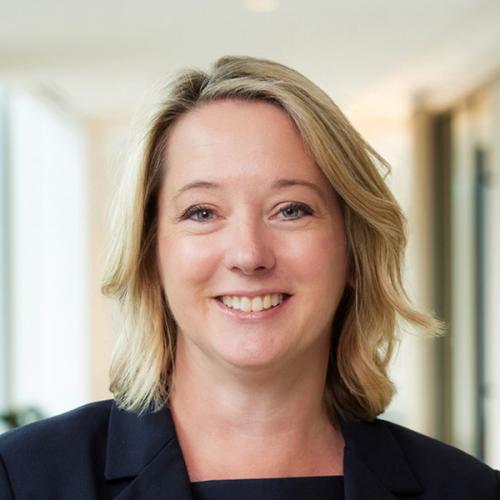
 

Catherine Coteus

VP of Sustainability
Arva Intelligence

Brings over a decade of experience in corporate carbon accounting and decarbonization strategy, with expertise spanning sustainable agriculture, net-zero pathways, climate risk, and corporate climate programs. Advised many global companies on climate strategy.

Catherine Coteus

VP of Sustainability
Arva Intelligence

Catherine Coteus

VP of Sustainability
Arva Intelligence

Brings over a decade of experience in corporate carbon accounting and decarbonization strategy, with expertise spanning sustainable agriculture, net-zero pathways, climate risk, and corporate climate programs. Advised many global companies on climate strategy.

Employee movement is the most common trigger for trade secret disputes. This roundtable explores how companies balance protection, culture, and retention in high-mobility environments.

Author:

Barry Golob

Co-Chair
Cozen O’Connor

Barry Golob

Co-Chair
Cozen O’Connor

Mergers and acquisition bring about profound risk for the loss or theft of proprietary information, with he added complications of uncatalogued trade secrets and departing employees with deep process knowledge only increasing these risks. This session will discuss practical strategies that in-house teams are implementing to mitigate these risks and allow for smooth M&A proceedings.

  • Integration of M&A systems to prevent risk during acquisition, and balance restrictive covenants.
  • How to mitigate the risk posed by departing employees with deep process knowledge.
  • Balancing enforcement with workforce mobility and ensuring that morale and professionality is maintained.
  • Strategies for joint development M&A.

Author:

Lana Gladstein

General Counsel
Seaport Therapeutics

Lana Gladstein currently works as a General Counsel for Seaport Therapeutics. She previously worked at APRINOIA Therapeutics as a Group General Counsel. Lana Gladstein attended Northeastern University School of Law.

Lana Gladstein

General Counsel
Seaport Therapeutics

Lana Gladstein currently works as a General Counsel for Seaport Therapeutics. She previously worked at APRINOIA Therapeutics as a Group General Counsel. Lana Gladstein attended Northeastern University School of Law.

Author:

Jim Gale

IP Litigation Co-Chair
Cozen O'Connor

Jim Gale

IP Litigation Co-Chair
Cozen O'Connor

Beyond legal risk, trade secret disputes can result in catastrophic knock-on effects throughout a business: they can disrupt operations, drain technical teams, and affect investor confidence for years. This fireside chat looks at how in-house teams manage trade secret litigation when the stakes extend far beyond the courtroom.

  • How litigation strategy changes when trade secret disputes become ‘bet-the-business’ matters.
  • Managing discovery scope, technical witness fatigue, and internal disruption over multi-year disputes.
  • Navigating investor relations, disclosure obligations, and activist pressure during ongoing litigation.
  • Decision-making around settlement, arbitration, or escalation when business survival is at stake.

Author:

Brian Walters

Executive Vice President and General Counsel
Matthews International

Brian D. Walters serves as Executive Vice-President and General Counsel for Matthews International Corporation, Pittsburgh’s oldest company in continuous operation since 1850 and operating in over 25 countries with over 12,000 employees.  During his 18-year tenure at Matthews, the Company has more than tripled in annual revenue, now producing approximately $1.8 billion in sales.   Brian has directed all legal matters for this publicly-traded corporation both nationally and internationally, as well as serving as a member of Matthews’ executive leadership team.  Mr. Walters has led over 75 domestic and foreign acquisition initiatives at Matthews, including extensive experience coordinating strategies to secure transaction approval from the U.S. Federal Trade Commission, managing HSR filings, as well as filings with the competition authority of the European Union.

Brian Walters

Executive Vice President and General Counsel
Matthews International

Brian D. Walters serves as Executive Vice-President and General Counsel for Matthews International Corporation, Pittsburgh’s oldest company in continuous operation since 1850 and operating in over 25 countries with over 12,000 employees.  During his 18-year tenure at Matthews, the Company has more than tripled in annual revenue, now producing approximately $1.8 billion in sales.   Brian has directed all legal matters for this publicly-traded corporation both nationally and internationally, as well as serving as a member of Matthews’ executive leadership team.  Mr. Walters has led over 75 domestic and foreign acquisition initiatives at Matthews, including extensive experience coordinating strategies to secure transaction approval from the U.S. Federal Trade Commission, managing HSR filings, as well as filings with the competition authority of the European Union.

Author:

Rob Rodrigues

Partner
RNA law

Rob Rodrigues

Partner
RNA law

Author:

Sheryl Garko

Partner
Orrick, Herrington & Sutcliffe

Sheryl Garko

Partner
Orrick, Herrington & Sutcliffe

Strategic collaborations are increasingly central to innovation, particularly in life sciences and technology, where companies rely on partnerships for research, development, and manufacturing. This session explores the trade secret considerations that arise across the full lifecycle of a collaboration, from early discussions and deal negotiation to active partnerships and potential disputes.

  • Trade secret strategy during early deal exploration and negotiating terms that protect the ownership of know-how, confidentiality obligations, and information access.
  • Offensive and defensive considerations when collaborations lead to litigation or misappropriation claims.
  • Managing trade secrets during active collaborations such as joint R&D, licensing, or manufacturing partnerships.
  • Trade secret risks when collaborations fail, including “busted deals,” employee mobility, and disputes over the use of shared know-how.

Author:

Carole Boelitz

VP, Global IP
Schneider Electric

Carole Boelitz

VP, Global IP
Schneider Electric

Trade secrets now sit far beyond R&D and the legal team. They run through data systems, manufacturing processes, vendor relationships, AI tools, and everyday employee workflows. As a result, effective trade secret protection increasingly depends on coordination between legal, HR, IT, security, engineering, and operations. This session focuses on how companies are adapting their internal structures to protect trade secrets as they spread across the organisation.

  • Why trade secrets are no longer confined to technical teams or formal IP portfolios.
  • How data systems, collaboration tools, and AI are expanding where trade secrets live.
  • The role of HR, IT, security, and operations in supporting trade secret protection.
  • Practical examples of cross-functional models that improve protection without slowing the business.

Author:

Doyon Won

Senior Counsel
Intellia Therapeutics Inc

Doyon Won

Senior Counsel
Intellia Therapeutics Inc

Author:

Greg Penoyer

Lead Product Counsel – Tech, IP and Supply Chain
SimpliSafe

Greg Penoyer

Lead Product Counsel – Tech, IP and Supply Chain
SimpliSafe

When trade secrets are misappropriated, companies face an early decision that can define the entire outcome of a dispute: whether to pursue civil litigation, seek arbitration, or involve the Department of Justice. This fireside session is led by a senior DOJ official and focuses on how these decisions are made in practice, including what the DOJ looks for when assessing potential trade secret cases and how those considerations should shape in-house strategy from day one.

  • How DOJ evaluates trade secret theft referrals, including evidence quality, victim cooperation, and jurisdictional factors.
  • When arbitration or civil litigation may be more effective than criminal referral.
  • Cost, disclosure, and control trade-offs across arbitration, court proceedings, and DOJ involvement.
  • How early choices affect leverage, timing, and the ability to pursue parallel proceedings.

Author:

Anand Patel

Senior Counsel
DOJ (Department of Justice)

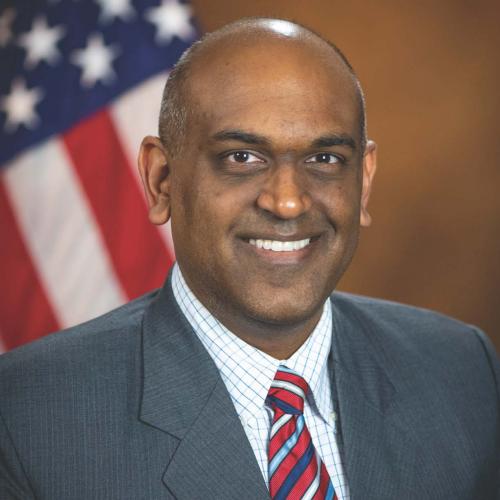
Anand B. Patel is Senior Counsel in the Computer Crime and Intellectual Property Section at the Department of Justice.  He investigates and prosecutes trade secrets theft, ransomware attacks, and computer intrusions.  Mr. Patel teaches Trade Secrets Law at the George Washington University Law School.  Before joining the Department, Mr. Patel spent a decade as an attorney at Paul Hastings LLP, where he handled all facets of disputes involving trade secrets.  He previously served as law clerk to the Honorable William Bryson of the U.S. Court of Appeals for the Federal Circuit.  Mr. Patel graduated from UVA School of Law and MIT.

Anand Patel

Senior Counsel
DOJ (Department of Justice)

Anand B. Patel is Senior Counsel in the Computer Crime and Intellectual Property Section at the Department of Justice.  He investigates and prosecutes trade secrets theft, ransomware attacks, and computer intrusions.  Mr. Patel teaches Trade Secrets Law at the George Washington University Law School.  Before joining the Department, Mr. Patel spent a decade as an attorney at Paul Hastings LLP, where he handled all facets of disputes involving trade secrets.  He previously served as law clerk to the Honorable William Bryson of the U.S. Court of Appeals for the Federal Circuit.  Mr. Patel graduated from UVA School of Law and MIT.