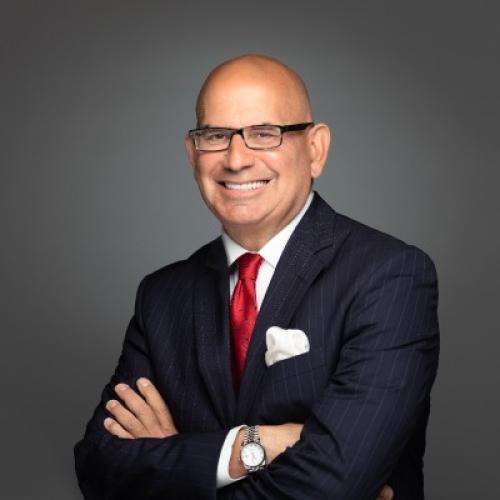
Jim Harrington
Chief Intellectual Property Counsel
Vera Therapeutics

Chuck Klein
Partner
Winston & Strawn
Orange Book listing decisions are coming under increasing scrutiny from both regulators and the courts, placing them at the centre of Hatch-Waxman disputes and a growing wave of antitrust litigation. As challenges over whether certain patents were appropriately listed increase, innovator companies must strike a careful balance between maximising lifecycle protection and avoiding competition law exposure. This session will explore how Orange Book strategy is evolving in response to heightened regulatory oversight and antitrust theories.
- Examine how companies determine which patents meet FDA criteria for Orange Book listing.
- Analyse recent cases and disputes where Orange Book listings have been contested.
- Explore how plaintiffs and regulators are framing Orange Book conduct as anticompetitive, including claims tied to sham listings, monopolisation, and misuse of the Hatch-Waxman framework.
- Review the increasing role of the FTC, including warning letters, enforcement actions, and policy statements, alongside the rise in private antitrust litigation targeting listing practices.
Damages remain a key driver of uncertainty in tech patent disputes. This debate explores practical ways damages analysis is evolving and where targeted reforms could improve predictability and settlement outcomes.
- Reasonable royalty and apportionment lessons from cases such as Ericsson v. D-Link and VirnetX.
- Use of comparable licences and portfolio evidence in complex tech products.
- Judicial gatekeeping and procedural tools shaping damages outcomes.
- Practical reforms that could improve damages predictability in tech cases.

Dan Sternberg
IP Counsel
Bose Corporaration

Tom Brown
Senior Managing Legal Director, Head of Intellectual Property Litigation
Dell
Combination drug products pose unique challenges across jurisdictions when seeking approval, patent protection, patent listing, and enforcement. These risks arise as formulation, dosing, or regulatory classification diverge from single-entity assumptions. A panel of in-house counsel and experienced litigators will examine how these issues play out in practice, strategies for protecting exclusivity, and managing biosimilar or generic challenges.
- Examine recent developments in protecting combination products, such as Orange Book listing strategy, infringement theories, and lifecycle planning.
- Identify patent listing and claim scope vulnerabilities unique to combination products.
- Examine recent developments in combination drug protection including portfolio strategy and lifecycle planning.
- Evaluate the plausibility and prior art challenges of combination products in clinical trials.
- Assess enforcement options when approval pathways and infringement theories do not align.

Eva Ehlich
Partner
Maiwald

Don Huddler
Assistant General Counsel
GSK

Nicole Mastrangelo
IP Counsel
The Broad Institute of MIT & Harvard

Nitin Virmalwar
VP Legal & Head of IP
Stoke Therapeutics
SEP disputes continue to shape the US tech patent landscape, dominated by discussions over fair rate settings and royalty negotiations. Disputes often focus on whether parties will take a licence and on what terms, with litigation being used to apply pressure, test valuation positions, and move stalled negotiations forward. In this session, we will cover how these disputes are playing out and how companies are using litigation to shape outcomes.
- How SEP holders and implementers decide when to license, litigate, or hold out, and how US litigation strategy is shaping royalty outcomes.
- Review how rate setting negotiations play out, and how the interpretation of fair rates is evolving.
- How parallel enforcement, including actions in Brazil, is used to increase pressure and break stalled negotiations.
- How streaming platform disputes (e.g. DivX v. Netflix / Amazon) demonstrate the use of litigation to force royalty discussions and resolve holdout.
- The role of codec technologies (HEVC, VVC, AV1, AAC) and implementation patents in shaping SEP licensing and enforcement strategy.

Eduardo Hallak
Partner
Licks Attorney
Eduardo Hallak is one of the founding partners at Licks Attorneys and one of our leaders at the Sao Paulo office. For more than a decade, he has been working as a litigator before state and federal courts in Brazil in several complex disputes and leading cases involving Patent law, competition, and regulatory compliance, most of them pursuing the interests of clients in the area of life sciences. He also has extensive practice in trademark litigation as well as technology transfer contracts, working together with multinational clients to establish strong brand protection and licensing programs in the country. Mr. Hallak also currently teaches IP litigation in the Post-Graduation course at the prestigious Pontifical Catholic University of Rio de Janeiro (PUCRJ), has taught Civil Procedure at the at the Brazilian Association of IP Agents (ABAPI), and is often invited to lecture on procedural and strategic aspects of IP litigation, in addition to being a member of the Special Commission on Mediation of the Rio de Janeiro Chapter of the Brazilian Bar Association (OABRJ) and the Enforcement Committee of INTA.

Gabbi Loedolff
Director of Buying
LUSH
Biologics litigation is evolving beyond classic biosimilar disputes, driven by higher-value products, an uptake in branded-vs-branded disputes, and growing injunction risk. This session brings together leading litigators and in-house counsel to examine how strategy is changing.
- How biologics disputes are starting earlier and outside traditional biosimilar timelines, (e.g. Novo Nordisk v. Eli Lilly), and what this means for launch and portfolio strategy.
- Examine the rise of branded-vs-branded cases like Alnylam Pharmaceuticals, Inc. v. Moderna, Inc., and how innovator enforcement and defence strategies are adapting.
- Review recent BPCIA cases and outcomes, including Hikma/Richter v. Amgen.
- Consider parallel proceedings in Europe and other jurisdictions and examine how they’re increasingly shaping U.S. biologics litigation decisions.

Nicole Clouse
VP & Head of IP
Generate Biomedicines

Katie Nolan Stevaux
Assistant General Counsel
Genentech
As PTAB challenges have become harder to initiate and sustain, this session considers when and how this could be used for plaintiffs and defendants. In sectors like MedTech, where device manufacturing, component supply chains, and the importation of medical technologies are central to disputes, the ITC can present a particularly strategic forum. This session examines when Section 337 investigations offer real strategic advantage, and when their speed and remedies create more risk than value.
- How and when the ITC offers strategic advantages over other forums.
- How parties are sequencing ITC investigations with PTAB proceedings and district court actions, in light of discretionary denial risk and parallel-proceeding dynamics.
- How SEP and FRAND arguments are treated at the ITC, including limits on injunctive relief, public-interest considerations, and how these issues affect leverage for both implementers and SEP holders.
- Compare outcomes of tech disputes at the UPC and ITC; review recent decisions and consider the benefits the UPC’s higher injunction rates.

Andrew Kopsidas
Partner
Blank Rome